Thinking about moving to South Boston and wondering what daily life really feels like? You want an easy commute, a walkable neighborhood, and a home that suits your routine without a lot of hassle. This guide breaks down everyday life in “Southie” so you can picture it clearly, from transit and parking to common floorplans and weekend spots. By the end, you’ll know what to expect and how to plan a smooth move. Let’s dive in.
South Boston snapshot
South Boston is a compact peninsula with two distinct experiences: the classic residential blocks and the South Boston Waterfront, often called the Seaport. The residential side centers on East and West Broadway with local shops and neighborhood-scaled streets. The Seaport is a separate waterfront district with modern condos, office towers and a lively dining scene. You can get a feel for both areas on the City’s neighborhood page for South Boston, which highlights parks, beaches and local events like the annual parade. Explore the official overview on the City’s South Boston page for context and amenities listed there. Visit the City’s neighborhood profile at the South Boston page on Boston.gov.
Expect a strong everyday rhythm: coffee on Broadway, a quick ride to downtown jobs, and evening walks along the waterfront. Castle Island, Carson Beach and Moakley Park are neighborhood anchors, and the Seaport’s promenades draw people for sunset walks and dining.
Getting around
Red Line and Silver Line
South Boston connects quickly to downtown via the MBTA Red Line at Andrew and Broadway. Many residents take the Red Line to South Station and the Financial District. The Seaport is served by the Silver Line (SL1, SL2 and SL3) and several MBTA bus routes, including the 7, 9, 11 and 47. For a simple snapshot of routes that serve the Seaport side, check the Seaport TMA transit primer. In practice, short hops to downtown are common and often take about 5 to 15 minutes depending on your exact start and end points and time of day.
Walking and biking
Many pockets of South Boston and the Seaport are highly walkable, so you can do daily errands on foot. Bluebikes stations serve both sides of the neighborhood, and the City has added protected bike lanes in key corridors. The waterfront Harborwalk and promenades make for scenic rides or runs. Read about system planning updates in the City’s note on Bluebikes expansion planning.
Driving and parking
Driving downtown is a short distance but can be slow during rush hours. On-street parking is limited on many residential blocks. If you rely on a car, you may weigh three options: an on-street resident permit, a deeded spot with your condo, or a paid garage. Monthly garage parking in and around the Seaport and downtown often runs in the hundreds of dollars per month. For current price ranges near a specific address, browse market snapshots like SpotAngels for South Boston monthly parking.
Housing styles and layouts
Three-deckers and rowhouses
Classic South Boston blocks feature early 20th-century wood-frame three-deckers and brick rowhouses, many converted to condos. Three-deckers typically have one home per floor and a vertical, stacked feel. These buildings offer city living with the character of a townhouse and, in some cases, small yards or decks. For local context on this regional housing type, see this overview of New England three-deckers on DotNews.
Inside, expect wood floors, a stair-run between levels and bedrooms on upper floors. Storage varies by building, and some homes have basement laundry or small outdoor spaces.
Townhouse condos
You’ll find townhouse-style condos with 2 to 4 levels and independent entrances in many parts of South Boston. Floorplans are usually narrower than suburban townhouses, with living and dining on one level and bedrooms above. Some include roof decks or a compact patio.
Seaport condos
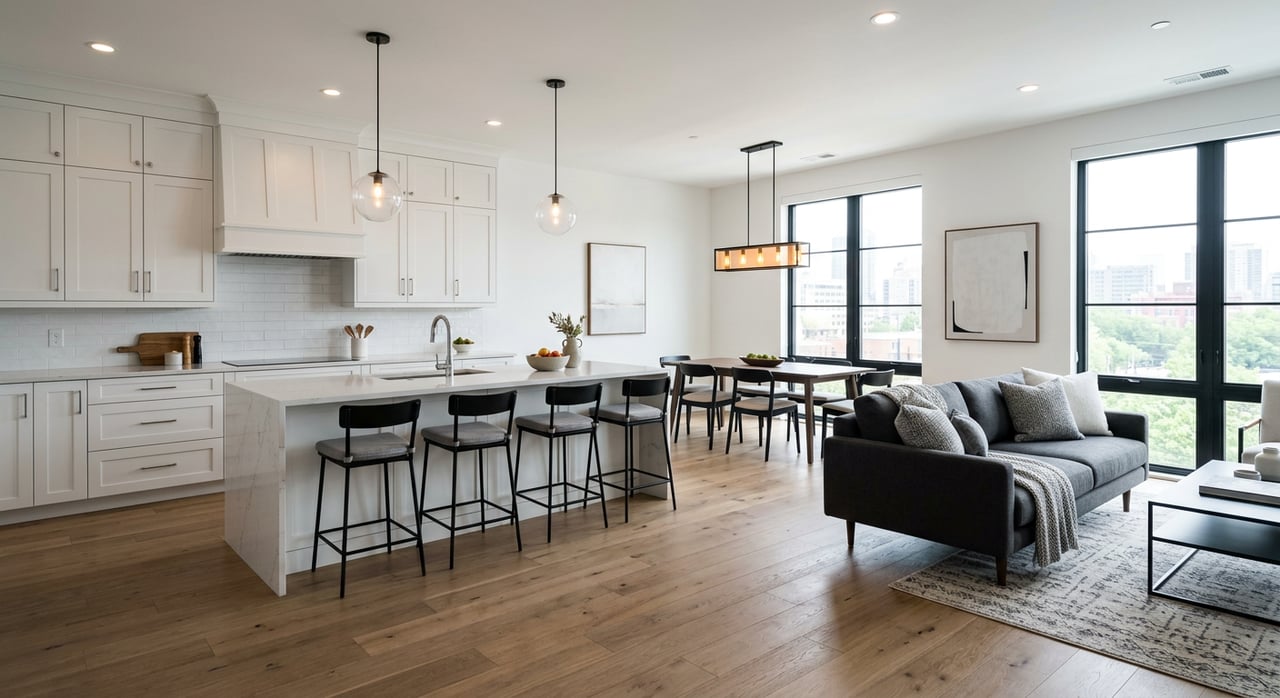
The Seaport offers modern, mid- and high-rise condo buildings with open-plan layouts, in-unit laundry, building gyms and concierge services. Floor-to-ceiling windows are common on higher floors, and many buildings include resident amenities on site. Learn how the area developed as a modern waterfront district in the City’s South Boston Waterfront public realm plan.
Picture your routine
Classic South Boston block
You start your day in a three-decker. Coffee brews in the kitchen while the sun hits the back deck. You head down the stairs, grab a bite on Broadway, then walk to the Red Line at Broadway for a short ride to South Station. After work, you stop by Moakley Park for a jog and stroll home past corner markets and local bakeries.
Seaport waterfront tower
You ride the elevator to the lobby and step out to a waterfront promenade. It is a 3-minute walk to the Silver Line for a quick trip to downtown. Lunch is a block away, and Bluebikes are at your corner for an easy ride to meetings. Evening plans might be a walk on the Harborwalk before heading upstairs to a building gym.
Parking and permits explained
Resident parking permits
If you plan to park on the street, the City of Boston’s Resident Parking Permit is neighborhood-specific and tied to your vehicle. You apply with a Massachusetts registration showing your Boston address plus proof of residency. Online approvals typically take about 10 business days. Permits are valid only within the zone tied to that permit. Review steps and required documents on the City’s page for how to get a resident parking permit.
Hours, enforcement and visitors
Resident-only hours can vary by block and have shifted in some areas through local pilots. For example, City Point tested expanded resident enforcement from 4-night to 7-night schedules on several streets. Check the latest posted signs on your block and read about past changes like the City Point resident parking pilot. Visitor options and time limits also vary by zone, so confirm details on the City’s resident parking page and note the rules on your street signs.
Moving day and deliveries
To reserve curb space for a moving truck, the City offers one-day temporary no-parking permits that typically hold two spaces. You can apply online or in person, then post required signs and flyers by the timeline listed. There are separate rules for containers like PODS, and questions can go to the City’s moving permits team. Start with the City’s official instructions to reserve a parking spot for your moving truck. Plan ahead, especially in peak months.
Parks, beaches and family life
Waterfront access is a hallmark of daily life here. Castle Island, Carson Beach and Joe Moakley Park offer room to run, play and relax, and the Harborwalk ties many of these spaces together. Neighborhood organizations also support families and newcomers. South Boston Neighborhood House offers programs and community connections that can be helpful as you settle in. Explore services at South Boston Neighborhood House.
If public schools are part of your planning, know that Boston Public Schools assignment is handled citywide and can change from year to year. Review official materials when you are ready and speak with the appropriate offices for the most current guidance.
Costs and tradeoffs to expect
- On-street parking is competitive on many residential blocks. A resident permit helps, but plan extra time to find a spot at peak hours.
- Many Seaport buildings include or offer paid garage options, which trade a monthly fee for predictable parking and on-site convenience.
- Without a car, transit, Bluebikes and ride-hail can cover most routines, especially if you live near Broadway, Andrew or the Seaport routes.
- Older homes may have more space per bedroom but involve stairs and varied storage. Newer Seaport condos offer modern finishes and building amenities, often with a more compact footprint.
Relocation checklist
- Decide your fit: classic South Boston blocks or the Seaport waterfront. Walk both to get a feel for your daily rhythm.
- Test your commute: map Red Line, Silver Line and bus options. Use the Seaport TMA transit guide for Seaport routing basics.
- Plan your parking: gather proof of residency and update your vehicle’s Massachusetts registration so you can apply for a resident permit. Start your application early at the City’s page for resident parking permits.
- Reserve moving day curb space: apply for a temporary no-parking permit and post signs on time. Start with the City’s guide to moving truck permits.
- Consider alternatives: if you want predictable parking, compare local garages near your building at resources like SpotAngels.
- For cyclists: check Bluebikes stations near your block and any protected lanes noted in the City’s Bluebikes expansion planning.
- For families: explore Castle Island, Carson Beach and Moakley Park on a weekend morning to see how these spots fit your routine. Neighborhood programs at South Boston Neighborhood House are a helpful starting point.
Work with a local guide
Choosing between a classic three-decker and a Seaport condo is easier with a partner who knows the blocks, the buildings and the logistics. From pet-friendly rentals to staged, move-in-ready condos, our boutique team helps you match your lifestyle to the right address and coordinates the details so your transition is smooth. If you are relocating to South Boston, let us show you the options that fit your day-to-day life and your budget. Connect with Joyce Lebedew to find your place in South Boston.
FAQs
What is the commute from South Boston to downtown like?
- Most residents use the Red Line at Andrew or Broadway, or the Seaport’s Silver Line, for short rides that are often about 5 to 15 minutes depending on time of day and destination.
How do resident parking permits work in South Boston?
- You apply through the City with a Massachusetts registration showing your Boston address and proof of residency. Permits are tied to your vehicle and valid in your neighborhood zone only.
What housing types will I find in South Boston?
- You will see classic three-deckers and rowhouses converted to condos, townhouse-style units with multiple levels, and modern Seaport condos with building amenities.
Is South Boston walkable and bike-friendly?
- Yes, many areas are highly walkable, and Bluebikes stations plus growing bike infrastructure make car-free errands and commutes practical for many residents.
How do I reserve street space for a moving truck in South Boston?
- Apply for a one-day temporary no-parking permit through the City, post signs as directed and plan ahead, especially in busy moving months.
