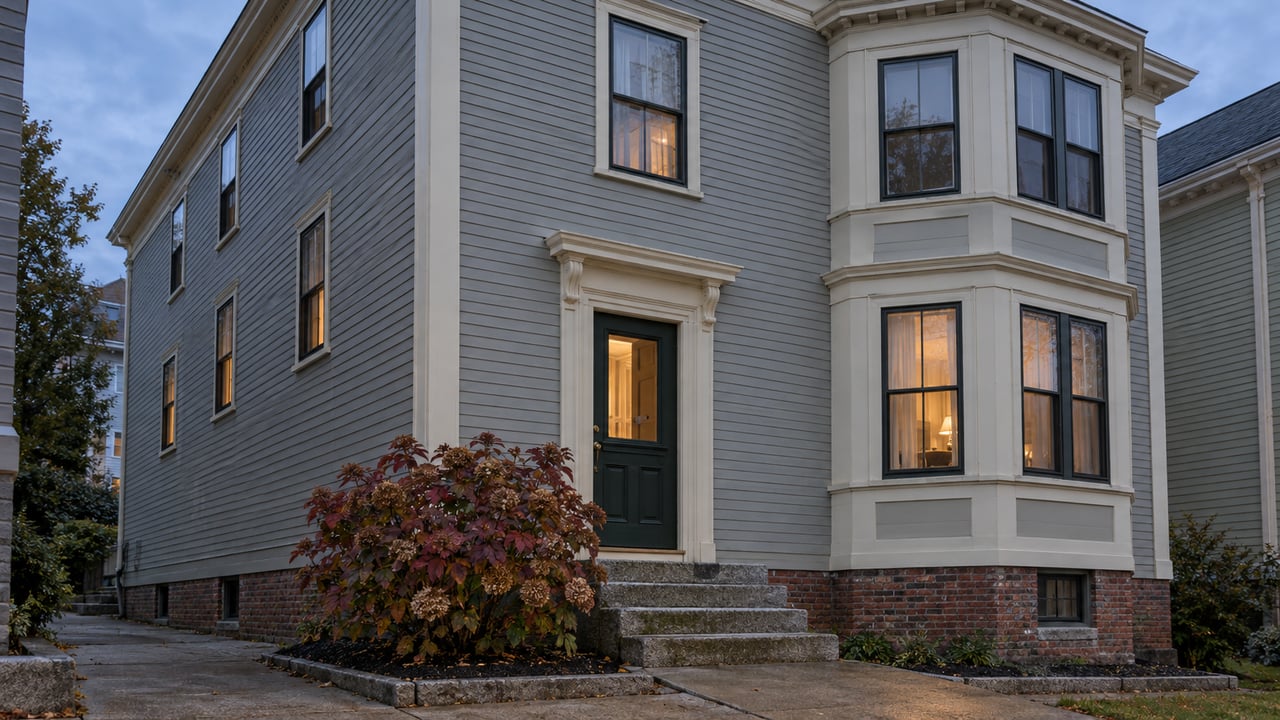
Picture two Dorchester condos with similar asking prices. One is the top floor of a converted triple-decker that shares a three-unit association with the two units below. The other is in the 20-unit building the Boston Planning Department board approved on September 17 at 2062 Dorchester Ave, about two blocks from Ashmont station. A buyer comparing the monthly fees would reasonably think they're the same kind of number. Starting January 4, 2027, they won't be. For most buyers with a conventional loan, the bigger building's budget will have to pass a reserve test that the three-unit association never faces.
That date is about ten weeks away, and it applies to the loan application date, not the closing date. A buyer who applies for a loan on or after that date falls under it, even if the search started this fall.
The rule, in the lender's own words
On March 18, 2026, Fannie Mae published Lender Letter LL-2026-03. It raises the share of a condo association's budget that has to go toward long-term repairs:
"We are revising our reserve allocation requirement for capital expenditures and deferred maintenance from a minimum of 10% to a minimum of 15% of the annual budgeted income assessment."
The letter says lenders must comply "when utilizing the Full Review process for all loan applications dated on or after Jan. 4, 2027." Freddie Mac announced the same change on the same day in Bulletin 2026-C, with the same effective date. Spring news coverage said Freddie hadn't decided yet. Freddie's own bulletin shows it had, so both agencies are moving together.
Two details shape what this means in practice. First, 15% is a budget allocation. It does not require the association to hold a cash balance equal to 15% of its budget. Second, the same letter tightened the workaround: when a lender relies on a reserve study instead, the budget now has to include the highest allocation the study recommends, and the "baseline funding" method can no longer be used. That method let the reserve balance approach zero without going below it. Fannie's August 5 Selling Guide announcement says the 15% standard will be added to the Guide once it takes effect.
The size line runs through Dorchester's housing stock
The rule only applies to Full Review, so the question becomes which buildings go through Full Review. Fannie Mae's Selling Guide section on waiving project review answers it with a table. For a "unit in a two- to four-unit condo project," project review is waived for new and established projects. The waiver also covers a five- to ten-unit project that isn't part of a larger development or master association. Freddie Mac's Guide also exempts two- to four-unit projects from project review. Fannie retired its lighter Limited Review option for applications dated on or after August 3, 2026, which leaves attached units in buildings over ten units generally going through Full Review.
That line matches how Dorchester was built. A 2004 Boston Redevelopment Authority report using fiscal year 2000 assessor data counted 4,315 three-family parcels and 3,633 two-family parcels in Dorchester, against 1,315 condominium-building parcels. Those counts are more than two decades old, and they count land parcels, not condo units. They still show the scale: many of the condos a Dorchester buyer tours sit in buildings that were two- and three-family houses before they became associations. When one of those houses is converted, the result is a two- or three-unit association, which falls squarely in the waiver.
The new buildings on the other side of the line
Dorchester's recent condo pipeline sits almost entirely above ten units. Statuses below are as of the date shown, and some are proposals that may change before anything is built.
| Address | Units | Status as of the latest report |
|---|---|---|
| 405 Washington St. | 13 condos | Construction complete, completion date listed as Jan. 3, 2026 |
| 77 Bailey St. | 12 condos in two buildings | Approved by the Zoning Board of Appeal, reported May 2025 |
| 2062 Dorchester Ave. | 20 condos | Approved by the Boston Planning Department board Sept. 17, 2026 |
| 1016 Washington St. | 22 condos | Filed with the city Oct. 14, 2026 |
| 39 Minot St. | 26 condos in three buildings | Under review, as of April 2026 |
| 555–559 Columbia Rd., Uphams Corner | 33 condos plus a library | Board approval Nov. 13, 2025; awaiting final state funding as of Dec. 2025 |
| 1120–1128 Washington St., Lower Mills | 57 condos | Not yet filed, as of April 29, 2026 |
Every project in that table has more than ten units, so units in them will generally face the 15% test once buyers' loan applications are dated after January 4. The 77 Bailey St. project replaces a single three-decker with 12 condos, so one lot is moving from the waived category to the reviewed one.
The 2062 Dorchester Ave. plan shows how much these buildings depend on first-time buyers. As the Dorchester Reporter reported, 15 of the 20 units would be sold without parking, some as small as 450 to 470 square feet. The project's zoning attorney, George Morancy, described them as aimed at buyers "who think that they can only rent." Those buyers are among the most likely to use conventional agency-backed loans, and that is why the reserve test lands where it does. When a budget shifts from 10% to 15% toward reserves, the operating side of that budget either shrinks or the monthly fee rises. On a small unit, the monthly fee is a large share of what the buyer pays each month.
Skipping the test isn't the same as being funded
The triple-decker condo's waiver means a lender won't check whether its budget sets aside 15%. That leaves the three owners to decide how much to save. The waiver still carries conditions: Fannie's Guide lists property eligibility, insurance and other requirements that apply when review is waived. But nothing in the waiver requires the association to have saved anything for a roof or a porch rebuild.
Boston-area experts quoted in April described how often that saving falls short. In The Boston Globe, Eric Churchill of Needham-based Schernecker Property Services said that of the hundreds of associations he has reviewed, not one was properly funded for long-term upkeep. He put it this way: "Lower condo fees attract people, but then the community reaches an age when all of a sudden the maintenance bills start going up." Braintree condominium attorney Stephen Marcus told the Globe that when maintenance is deferred, "$100,000 problems become million-dollar problems." The same article cited a LendingTree survey putting Boston's median monthly condo fee at $386, with nearly 30% of owners paying more than $500.
Those figures are citywide, not specific to Dorchester. In this context, they mean a low fee on a three-unit association is a number set by three neighbors, with no lender minimum behind it. Starting in January, the fee in a 20-unit building will have to support at least a 15% reserve line to pass Full Review.
Why the budget matters more than the price right now
The latest Massachusetts Association of Realtors report for Dorchester, covering September 2026 and released alongside MAR's October 14 data, put the condo median sale price at $625,000. That's up 10.1% from a year earlier. Sellers received 98.4% of their original list price on average, there were 50 condos for sale, and supply stood at 4.3 months. Those figures rest on only 9 closings in the month, down from 16, so treat them as a direction rather than a firm level. Still, they show buyers paying close to asking. When the price has little give, the monthly carrying cost becomes where two similar units really differ, and the fee is the part of that cost a buyer can read in advance.
The documents that show it are the same in a three-unit house and a 33-unit building:
- The current budget. Look at the reserve line as a share of total assessment income. For a larger building, see whether it already reaches 15%.
- The reserve study, if one exists. Under the tightened rules, a lender relying on it will look for the highest recommended allocation in the budget.
- Any planned or discussed special assessments, and the age of the roof, porches and building systems.
- The 6(d) certificate. Under M.G.L. c.183A, §6(d), the association provides a statement of unpaid common expenses and other sums assessed against the unit within 10 business days of a written request and payment of a reasonable fee. Once recorded, it binds the association on those amounts. It covers what the seller owes now. It says nothing about what the building will need next.
This post is general information, not legal or financial advice. Your lender, attorney or financial advisor can confirm how these rules apply to a specific unit and loan.
FAQ
Does the 15% rule apply to a loan I apply for this year? Fannie Mae's letter ties the requirement to loan applications dated on or after January 4, 2027, under Full Review. Your lender can tell you which date and review type apply to your file.
Is a five-unit Dorchester building waived too? Fannie Mae waives project review for five- to ten-unit projects only when they aren't part of a larger development or master association.
Does 15% mean the association needs that much cash in the bank? No. The requirement is that at least 15% of the annual budgeted assessment income goes to reserves.
If you're weighing a triple-decker condo against a unit in one of Dorchester's new buildings, Joyce Lebedew can help you get each association's budget, reserve figures and 6(d) certificate in hand before you write an offer. Book a consultation and we'll go through the numbers with you, one building at a time.